Comm 2.0

by: Khrisna B. Artuz & Merry Beatrice V. Sanchez

          53492900_2567510843319971_7670047460139466752_nMedia and communication, both entirely distinctive concepts, both rooted in each others needs. Media in a sense greatly influences communication, communication on the other hand is the basis for maximization of media usage. In this era where technology has dominated all of human race the innovation concerning media and consequently communication is greatly recognized. From ones bulky phones and computers to sleek and automated ones, from hours of mail travel to an instant reply by the web, from long tiresome paragraphs to brief and concise GIFs and emojis. The thing is our ways have truly evolved with time and that people have become accustomed to the ways of this 21st century technological world.

52651130_402105003674826_2005612722070224896_nChange is inevitable. We are all witnesses to this ever-changing world we live in. Way way back, communication was all about sounds that does not even have an actual meaning. It was all about symbolisms, that if you rode a time machine right now and go back to those times, maybe you’ll be laughing your ass off seeing how those people communicate. If you try talking to those people you might even scare them off because the way you talk would be different from what they’re used to, so it will only result to misunderstandings. The thing is, it is innate in us humans to be able to interact, it is human nature to try and develop relationships with the use of cues most especially communicative ones. 53308971_371939670306451_7150027444303429632_nIn a deeper sense, in the times of our grandfathers and mothers media was almost non-existent yet and communication was truly wholesome at some point. Wholesome in a sense that lies were easier to spot since the interaction would always be face to face. Love was also conveyed with great effort, in their ability to write letters which deeply reaches the soul and in the way a boy serenades his love. We can say that the concept of love back then in the sense of communication and media was much more heartfelt and pure.
52948735_302856983711345_61590058657906688_nIn today’s generation, liars, cheats, and those who take advantage of others are widely spread across the web. To love nowadays does not require that much effort. The sincerity of all things has been affected with the rise of advanced media and communication tools. A once very special occasion can be corrupted by the eyes of those that govern the internet. So, maybe in 50 years or so this trend of rapid change might still go on. Maybe, one will not need to travel far away to attend an important meeting or for his/her presence to be recognized. Realistic holograms may do the job a couple of years from now. Some hi-tech machines may not be shrouded in high end facilities, it may be within our reach or even in the snap of our fingers. The thing with technology is that you’ll never know what will come forth, engineers and scientists or even us students, who’s privileged enough to access quality education, could create such programs that may enable us to communicate much better than how we do at the moment. We can never tell how and when but let us expect more because our needs are growing continuously and with these needs arise greater innovation and inventions.

New Age for Communication

By: Klynne Clarise Kuizon & Honey June Gabiota


Through the years, communication has evolved. The way people communicate with each other today is entirely different ages ago. In early times, we communicate orally and then we eventually learned how to write in rocks and paper. The existence of print and broadcast media enables us to disseminate information at long distance, massively, and effectively. Today with the invention of computers and internet, social media dominated as tool for us to communicate (Lambert 2018).

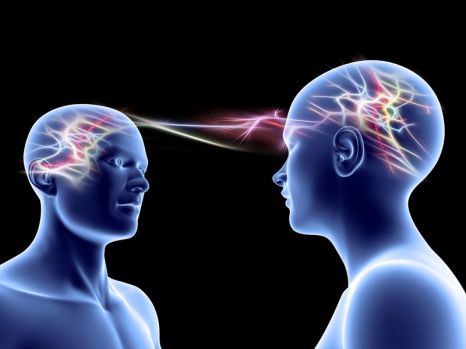
A lot of things could happen in the future. With the curiosity of human mind we will forever be evolving and innovating. Fifty years from now the ability to transmit thoughts, without speech, from one human being to another in other words telepathy would be possible. In an article written by Caitlin Dewey, Mark Zuckerberg  stated that, “One day, I believe we’ll be able to send full rich thoughts to each other directly using technology,”. This statement implies that we have come to a point that everything is made possible with technology. 

Image result for brain-computer interface.
Photo credit: ALS Association

Last February 2017, researchers from Stanford University have developed an advanced brain-computer interface. Paralyzed patients controlled the point-and-click motion of a cursor on an onscreen keyboard. The cursor moved around via direct brain control. This device enables to read the patients mind. Reading our thoughts is now possible the problem now is how to send the message. In 2013, scientist at Duke University implanted two lab rats with microelectrode arrays and taught one of the rats to press one of two levers. Afterwards, the second rat, who had not been trained, also seemed to know which level to push: It had received neural signals from the first rat, via the implant.  

Telepathy would revolutionized the way we communicate with one another.

References:

Dewey C. 2015. Mark Zuckerberg says the future of communication is telepathy. Here’s how that would actually work. The Washington Post. Available from https://www.washingtonpost.com/news/the-intersect/wp/2015/07/01/mark-zuckerberg-says-the-future-of-communication-is-telepathy-heres-how-that-would-actually-work/?noredirect=on&utm_term=.07196e28027f .

Goldman B. 2017. Brain-computer interface advance allows fast, accurate typing by people with paralysis. Stanford Medicine. Available from https://med.stanford.edu/news/all-news/2017/02/brain-computer-interface-allows-fast-accurate-typing-by-people-with-paralysis.html

Lambert T. 2018. A brief history of communication. Available from http://www.localhistories.org/communications.html 


SURPRISE OF THE FUTURE: Are we ready for it?

              We live in this world with gradual changes cause by our creative imagination. Everything is instant, but are we assured of its convenience forever?

Multiplicity-by-John-Wardle-Architects-1
Photo retrieved from: https://www.thecoolist.com/seven-futuristic-cities-incredible-live/

Let’s travel back in the time when there were handwritten letters, telegram, beeper, etc. and the days you still watch television in a big box.

hologram2
Photo retrieved from: https://www.clean-rooms.org/what-can-we-expect-from-hologram-technology-in-the-future/


Communication in the past might be hard but valued while everything today is just one click away.


In 50 years, there might be all-accessed control screen for everything at home and people may contact each other by the use of hologram wherever they are.


 The telepathy in communication were people can  share their ideas without voicing out, this may be familiar from a scene in a sci-fi movie however, we must be mindful that humans has its way to make their life comfortable.

42-29421947
Photo Retrieved from: https://www.smithsonianmag.com/innovation/scientists-prove-that-telepathic-communication-is-within-reach-180952868/

               Aforementioned above are the predictions in the next 50 years. There are existing news about implantation of microchips in the human body that shocks the world. However, there are thousands of people living in the country of Germany and Sweden had opted to get chipped as  key cards that are useful for their transactions. 

download
Photo retrieved from: https://www.fool.com/investing/2018/11/25/4-top-stocks-in-artificial-intelligence-to-buy-now.aspx

A dozen of satellites are being launched for connections, thus technology plays an increasing role in communication. We are excited to embrace high-tech innovations, but what if it creates greater problems ? Lost of personal interaction, competition in modernization or worst, wars in the world.We have different creative discoveries from the telephone by Graham Bill to the smartest television that we have in the market. Everything can happen and we have to accept change, use the innovations into productivity instead of destruction of humanity.

             There is a fire that keeps on burning, we couldn’t stop this technological explosion. Will these changes be a better platform? Better think of it rather than seizing the moment without thinking what will happen next.


Article by:

NIQUE, SHENNA MAE P.

PALAFOX, MAURIZ GRACE M.

References:

Dunbar, B. (2015, May 15). What Is a Satellite? Retrieved February 20, 2019, from https://www.nasa.gov/audience/forstudents/k-4/stories/nasa-knows/what-is-a-satellite-k4.html

Hurd, D. (2018, October 24). Why Implanted Microchips in Humans Could Go Mainstream Sooner than Later. Retrieved February 20, 2019, from https://www1.cbn.com/cbnnews/world/2018/october/why-implanted-microchips-in-humans-are-about-to-go-big

What Lies Ahead

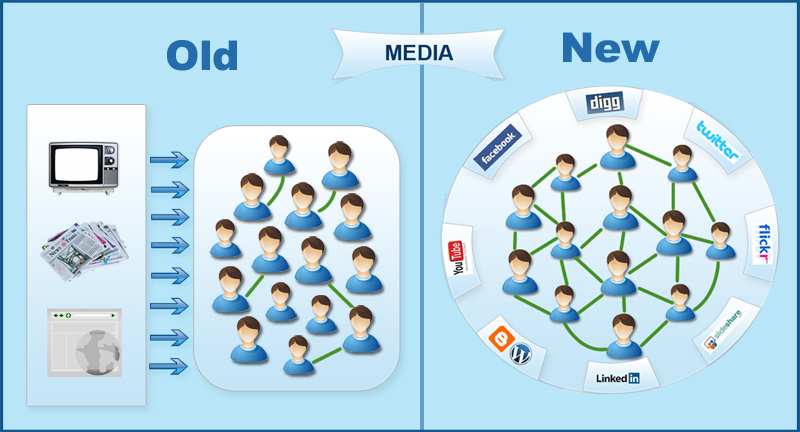
Communication and media is a relationship that involves an interaction between participants; both evolved throughout the years along with the evolution of the people and the world. From the mere simple actions and sounds like “oh” or “ah” of the first men on earth. And the old and traditional media such as speaking or talking, we, now, developed new ways of communicating which led into the discovery of new media – including software that is used by people to communicate i.e. social media apps; Facebook messenger, Gmail and etc.

old-vs_new-journalism

Retrieved from: https://1mayamaria.wordpress.com/2015/04/26/traditional-media-vs-new-media/

Forecasting 50 years from now, as we evolve, our ideas and imagination goes far beyond with the advancement in time, where the things we once thought are impossible and quite bizarre are now made possible specifically in the field of communication and media.

oof

Retrieved from: https://twitter.com/colliers/status/1039646047021293575

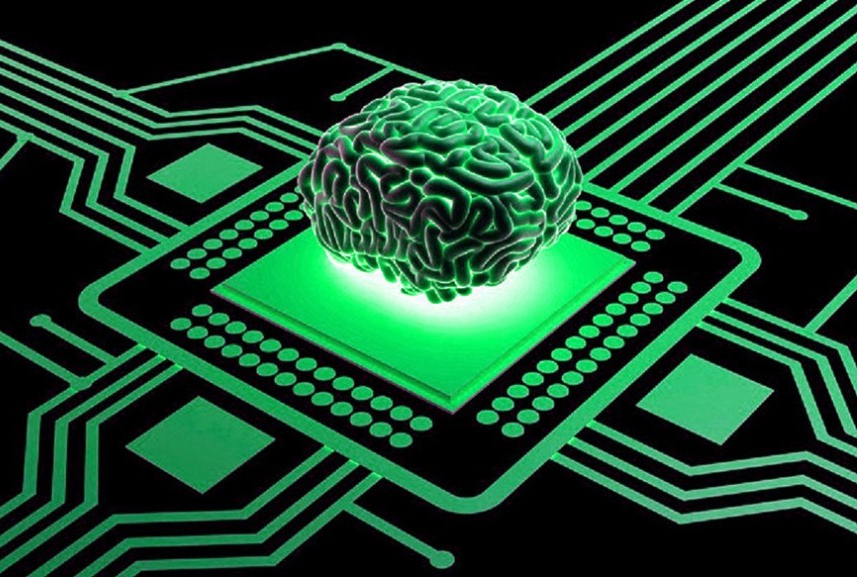
Using a chip implanted in people’s head that links in to their systems, they can now control and do whatever they want; they can communicate by visualizing things on their own vision – seeing a projected real life figure of someone from afar as if they’re interacting right next to each other.

brain-on-a-chip-990x577-e1550973639984.jpg

Retrieved from: http://sciencenewsjournal.com/whats-next-3d-chip-brain/

a

Retrieved from: https://www.theimagen.eu/futuristic-wallpapers-wallpapersafari.html

s

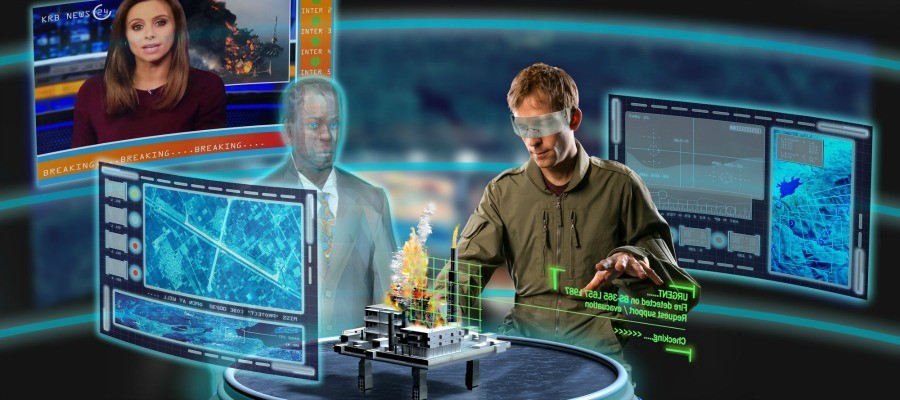
Retrieved from: https://www.themanufacturer.com/articles/augmented-reality-to-transform-battlefield-ops/

Such prediction was inspired by the show “Black Mirror”, which exhibits the advancement people are capable of creating.

blackmrrorRetrieved from: https://medium.com/nyc-design/branching-narratives-black-mirror-bandersnatch-ed1b5dfde941

Truly, the human brain and its capabilities can do exemplary inventions and innovations that transcends beyond what’s expected. Change is inevitable in all aspects of life just like in communication and media which offers convenience to mankind but along these we must always be mindful of our actions and the consequences it may bring.

maxresdefault

Retrieved from: https://www.youtube.com/watch?v=v35GqIhA9Z8

ARTICLE BY:

Apid, Jannah Grace

Caparino, Shanine Trishia

Yumang, Sebastienne

Reference/s:

Schmitz, A. 2012. Business Communication for Success. What is communication? Saylor Academy. Retrieved on February 2019 from https://saylordotorg.github.io/text_business-communication-for-success/s00-license.html

Change remains permanent

Long before today’s modern technology existed, everything was more dependent on the resource people had in hand as their means of communication. Digging deep to what the past had to offer, the following are top three of how people communicate in the past according to Kailun Zhang.

Number one is the use of Smoke signals, this was done by the indigenous tribes in the 1500s.

smoke signalsRetrieved from: https://imgur.com/gallery/GpU1h?fbclid=IwAR0_U-PxZ4g3PXm6wj0kCoLZDstV75BSizQ2S_DSTyI8F1rKzhZNBGvjBnA

Number two is the Pigeon post used by the Romans 2,000 years ago.

pigeon post.jpg             Retrieved from: https://en.m.wikipedia.org/wiki/Pigeon_post?fbclid=IwAR0fWrJCQ17Uz2khFgf_rumRLWtQLgie_MixQot8WLFN3YGQCDBuKNQlICI

Number 3 is the Snail mail from 255 B.C.

snail mail.jpgRetrieved from: http://selfavenue.com/why-snail-mail-is-special/communication-email-letters-personality-snail-mail-special im68598/?fbclid=IwAR1jUtavg9daTMj- HpGrzAUoC9QD4TNnNLsLyBbJVYjVD5N6sGT78xR6Wk

In relation to prediction of what communication and media will be like in the next 50 years, the possibilities are endless. Looking back to what has happened in the past, people make strategic ways to communicate to those who are close and far from them and as a result, computers and touch screen cellphones are invented to make people’s lives easier. In the upcoming years, technological advancement will increase to what is expected because this is also an aftermath of the fast-paced growth of improvement and technology. The technology of communication evolves at a blistering pace. This is why predictions will not be far from its possibility of happening because the human mind and idea extends to the thinking of what can cope up to the recent situation of society.

In conclusion communication and media will continue to progress and develop over the years with better details and composition than before in the reason that the human thinking does not stay stagnant on the now but goes beyond the limits of trying something new. There might be difficulties in reaching the desired standard given that a high one is already set by today’s modern inventions but the provision of these advancements will not be limited to the norm only but will strive for something greater.


ARTICLE BY: JOYCE CARMEL T. MORAGA & RENZIE ANNE GONZALES


REFERENCES

George, H. (n.d.) The law of human progress. Henry George. Viewed 5 February 2019      from http://www.henrygeorge.org/pchp41.htmfbclid=IwAR0ObMFFSYWMoNO01ZU2jeiXgUFNslnDuWwh3-20l6LJNhI6pSRdbiUlMhA

LemonLimeSkull. (2016). Smoke signals: examples and use in modern day. [Photograph].  Retrieved from https://imgur.com/gallery/GpU1hfbclid=IwAR0_UPxZ4g3PXm6wj0kCoLZDstV75BSizQ2S_DSTyI8F1rKzhZNBGvjBnA

Ransome, A. (n.d.). Pigeons. [Photograph]. Retrieved from https://en.m.wikipedia.org/wiki/Pigeon_postfbclidIwAR0fWrJCQ17Uz2khFgf_rumRWtQLgieMixQot8WLFN3YGQCDBuKNQlICI

Why snail mail is special. [Photograph]. Retrieved from e.com/why-snail-mail-is-special/communication-email-letters-personality-snail-mail-special--im68598/?fbclid=IwAR1jUtavg9daTMj–HpGrzAUoC9QD4TNnNL

Zhang, K. (2015). Then & now: communication through the ages. The Queens Journal. Viewed 5 February 2019 from https://www.queensjournal.ca/story/2015-10-19/lifestyle/then-and-now-communicationthroughtheages/fbclid=IwAR19lrBSMBRMuwFAryfc8nFnfnymWRvl_XwgYuNq-nycKUB_69L5euatZ8

A Stitch In Time

Article by:

Zoe Rein Isobelle J. Florete and John Patrick G. Octavio

communication-blog-pic
Photo Credit: www,glapr.com

Today, in a world where communication and media go hand in hand, it is quite hard to determine how people communicated before.

Integrated-Marketing-AU
Photo Credit: http://www.webdesigncity.com.au

Communication is defined as the process by which people exchange information whereas, media is considered as an instrument of mass communication. Most, if not all, cannot fathom living in a world where cell phone or social media does not exist.


landa_maya
Photo Credit: http://www.ancientscripts.com

By this time some advanced civilizations had created the system of writing, the alphabet system and is followed by the discovery of the papyrus which gave birth to the concept of mass media.


By the next 50 years, we are sure to see many more evolution and advancement in communication and media. We may see people having face to face interactions, this is because by nature humans are social animals, and needs other humans to survive, a driving force of the social nature of humans is through the hormone oxytocin which elicits feelings towards others (Waytz, 2014).

man-machine.jpeg
Photo Credit: http://www.ifsecglobal.com

However, face to face interactions will be minimal, this is primarily due to the advancements of technology, as technology experts believe that in the future everything would be assisted by machines and gadgets, through this the interactions will be between man and machine (Floyd, 2018).


connected-brains-e1517263101643.jpg
Photo Credit: http://www.exploringyourmind.com

50 years from now, to enhance social interactions, the discovery or creation of a brain-to-brain communication device might be possible, this is through the development of the technology similar to those used to monitor and stimulate brain functions (Maiques, 2016). It will be another era of human communication in which feelings, hues, music or dynamic ideas are imparted. One may even have the capacity to think and convey all in all and open the way to non-verbal communication with different species.


moods-bg.png
Photo Credit: http://www.elearning.prevent.homeoffice.gov.uk

50 years from now, mood-communication may be possible. One’s mood which is reflected in the brain’s wave pattern, will affect the surroundings in order for them to get feedback – for example lift one’s mood and shape it in various ways. (Frank, 2012).


iStock-673273200

The future that lies ahead is uncertain, but the future of communication is within our grasp. Its evolution and development is inevitable. Should we take another step forward? Or should we reconsider and take a step back? I guess, we’ll never know. 


References

Floyd, C. (2018, March 16). In 50 years we’ll have ‘robot angels’ and will be able to merge our brains with AI, according to technology experts. Retrieved from BusinessInsider: https://www.businessinsider.com/we-asked-6-experts-what-the-world-will-look-like-in-50-years-time-mwc-2018-3

Lambert, T. (2018). A Brief History of Communication. Retrieved from Localhistories: http://www.localhistories.org/communications.html

Smith, L. (2018, February). A Brief History of Communication. Retrieved from Neighboorhood: http://www.neighbourhood.tv/a-brief-history-of-communication/

Taylor, R. (2018, December 31). A Short HIstory of Media. Retrieved from Owlcation: https://owlcation.com/humanities/A-Short-History-of-Media

Waytz, A. (2014). 2014: What Scientific Idea is Ready for retirement. Retrieved from Edge: https://www.edge.org/response-detail/25395

Frank, L. (2012, July 16). Beyond Speech and Gestures. Retrieved from https://thenextweb.com/media/2012/07/15/whats-the-future-of-communication-lets-ask-the-e xperts/

Communication and Media: Emailing Brainwaves

by Francis Gideon Tagnong & Divine Angela Serag

How often do you send out hardcopy postcards today?

Our answers to that question would be an accurate reflection of our current modern time and age. In a timespan of just one decade, communication has evolved more rapidly than our capacity to adapt to it. From growing up with antenna TVs and snail mail, society now stands in the age of satellite dishes and text messaging. Today, very few of us go outside the confines of our own home without our electronic devices. Social media apps allow us to broadcast our moments while we’re actually living them. In this sense, our moments no longer only belong to us but to all the people in touch with our profiles. (Video, 2004)

bigstock-215604928
The robot with artificial intelligence fired a human from work. Robots replacing human workers on industry. The human lost his job to a robot. Automation industry. Robots replacing mankind. Future con

When people think of the future, they think of robots. In our opinion, robots will merely have relatively small value fifty years from now. There would be no use for humanoid machines when an artificial intelligence system manages your household.  In light of this, our prediction for the future includes the taking over of virtual reality with neurotransmitter devices. Simple tasks such as calling or messaging can be done with just a thought process. No hand gestures, no voice commands – just merely brain signals that manifests a virtual interface.

This prediction stems from the fact that the current technological trends aspire for convenience and hands-free advancements. In basic terms, society’s adaptation aims for wireless connectivity in all aspects of our lives. We are decades away from such technology, but if nanotechnology were to advance in greater heights, it is not a distant reality. Scientists are currently working on technology that uses brain signals to directly communicate with each other, through implants that mirror the concept of telepathy. (Strickland)

connected-brains-e1517263101643

The evolution of technology progresses at a rate that our human minds cannot simply comprehend. Every year, an array of new technology is being released. Case in point, it may turn out that our predictions don’t even scratch the surface. Only time will tell.

References:

Strickland, J. (n.d.). What is the future of communication? Retrieved from How Stuff Works: https://electronics.howstuffworks.com

Video, V. (2004, November). Future of Communication. Retrieved from Future For All: https://www.futureforall.org


The Future of Communication and Media

Related image

Photo retrieved from https://www.business2community.com/social-media/social-media-evolution-communication-0678248

“From primary orality through to our current age, there have been a number of major communication advancements traceable through the tools and technology that have risen.” (Barrow, 2009)

Life has changed dramatically over the past century, and a major reason for this is the progression of media technology. Methods of media and communication have come a long way since the grunts of the early cave men. Before, communication is merely in the form of context, like drawings on the walls of caves, gestures and such. Communication was more personal and a face-to-face contact but now communication and media emerges into a great extent. With society moving into the electronic age, more people are communicating in cyberspace not only to access more information, but also to create a reality of their own.

Revolution in every corner of the virtual world today is occurring. Children of today and tomorrow will likely not remember broadcast, radio, music or any type of information or entertainment being limited to one device, one screen, or one delivery system. The computer may have changed since the 80’s, but communications and media are changing how our world discovers information today.  Media and communication is a rapidly changing and the world’s fastest growing industry. Gone are the days of typewriters, rotary phones and snail mails, phone book and dictionaries. The access to and use of digital media technologies such as PCs, the Internet, computer games, mobile telephones, etc., have become a normal aspect of everyday life in the world community country.

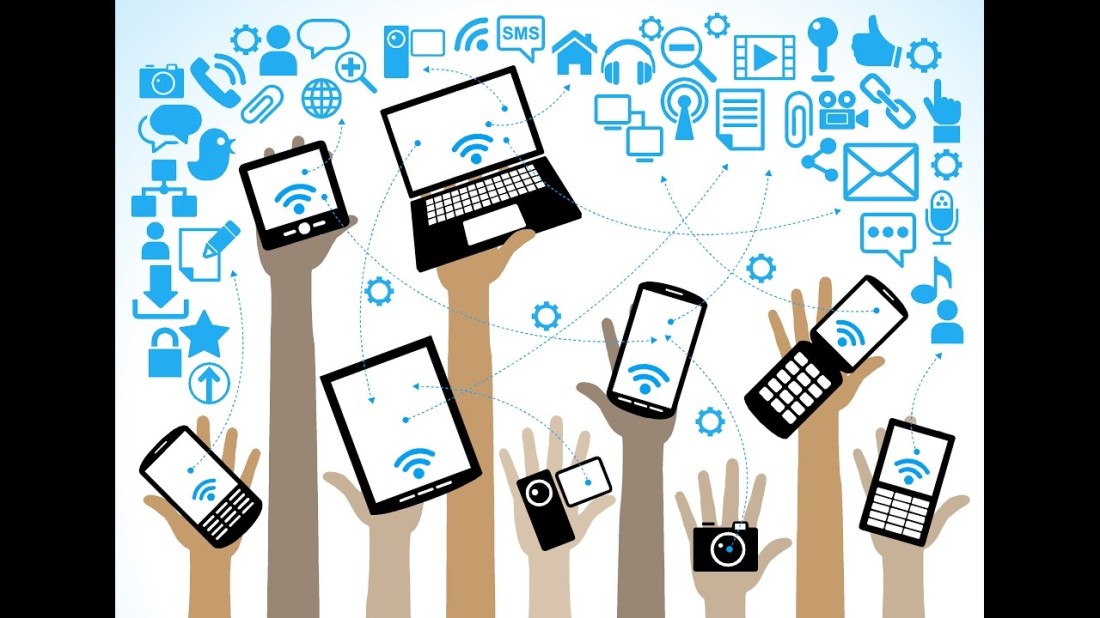
Image result for technology and people
Photo retrieved from http://misterplaza.com/ver_soloproducto.php?recordID=241&productoID=106

In 50 years from now, the world will probably be witnessing the fastest transformations brought about  by advancements in communications technology. People and the society are increasingly mobile and urban. Geographical, political and social landscapes are changing. All of these have impact on the way people communicate. The touchscreens in people’s smartphones will be invading every part of their lives; from the bathroom mirror, to the touchscreen table and even the possibility to interact with your living-room touch window.

Communication is like the lever which drives the

Image result for technology and people
Photo retrieved from https://www.wired.com/story/center-for-humane-technology-tech-addiction/a

modern world, across every sphere of life, and the media, the fulcrum, that connects and influences the society, through evolution. The world has invented so powerful technology that its people might become the slave of it. People say that face-to-face conversations is “the most human thing we do.” What are the consequences of living in a world where people do this less and less? With this in mind, visualizing what communication and media might look like in 50 years’ time is incredibly challenging and at the same time quite alarming.


– Nicole Pauline Plagata & Ma. Lorena Serisola


References

Barrow, 2009. A Brief History of Communication Media. http://blog.timebarrow.com/2009/03/a-brief-communication-media-history/?fbclid=IwAR1VqCO_VbJ2_q1MV63AJ8zfNPlg7BLmJxyYrYLWKUgalT7WCF-ElrtIjb8

Entering to a new dimension


wearable-technology-healthcare-1

Article by: Potato, Rasgo, Sante

The idea of media and communication 50 years from now would be a dynamic concept. Everything would be accessible and available with just a flick of wrist or a snap of a finger. From the slim and handy touched-screen phones, the smart watches, and tablets that connects you to the globe until the time when people will no longer need to carry any piece of gadget. No more complains on misplaced phones nor stolen gadgets because everything is in just in your body-built in! A chip inside the body will took care of your everyday needs. Microchips can be program to suite for each individuals need from a very own personal key to your very own credit card or even in measuring your health (Eltorai, 2016). Media and communication would probably be not the “complicated” media and communication anymore, but it would be just as easy as blinking and breathing for that matter. Holograms are the new norm in communicating with far away friends and relatives. Students will be enrolled in e-classroom (Yusel, 2018) where projectors and Tv’s replaced physical teachers with lessons being taught and to be broadcasted to any part of the world.  Phones would be like bandages or tape just wrapping around our fingers or hands where our brain sends signals of whom to call or contact depending on the situation, if we want to send a normal message or an SOS alert (Strickland, 2014). In the future, Telepathy will be made possible just like how werewolves on fictional books communicate with each other. They talk and connect with their minds. Yet, of course it has something to do with physics, electronics and science. Everybody is linked to everyone in the world using a single database. With the development of 5g technology (Bonhill Publications, 2019), there’s nothing to hide and no more lies to tell in an openly connected community. But considering the other side of the door,  there needs to be a control of data that will be put up on the database– psychiatrists, inventors, innovators, scientists and other authoritative people in charge of maintaining peace will have to discuss what they should do to avoid civilians from having break downs or from exaggerating things that should not be. And once we took that great step towards a new dimension, viola! An efficient and more connected world is waiting for us in the next fifty years.

References:

Bonhill Group Publication (2019). 5g innovation possibilities endless. Information Age.com retrieved last February 18, 2019.  14 Bonhill Street, London EC2A 4BXT. 0207 250 7010

Eltorai, Adam E. M.; Fox, Henry; McGurrin, Emily; Guang, Stephanie (2016). Microchips in Medicine: Current and Future Applications. BioMed Research International. 2016: 1–7. doi:10.1155/2016/1743472. ISSN 2314-6133.

Janice Yusel (2018). Holograms in the classroom? The not so distant future of Ed Tech. Bluerange Technology. Retrieved at http://www.bluerangetech.com last February 18, 2019.

 Eliza Strickland (2014). Building Mind-Controlled Gadgets Just Got Easier. Institute of Electrical and Electronics Engineers. Retrieved at spectrum.ieee.org last February 18, 2019.

*Photo taken at raoinformationtechnology.com