From the Code of Hammurabi to “I Love You, 3000:” Tracking the Trend of Communication From Ancient Times to The Future

By: Colleen Calizo, Matthew Palabrica, and Angeline Tupas

If we look back through history, we can see how early forms of communication and media were made for a main purpose: to keep records. Examples of these are artifacts like the Rosetta Stone and the Code of Hammurabi.. Instead of using paper, people wrote upon rock. These tools for inscription therefore allowed information to be preserved for succeeding generations to know. Aside from record-keeping, communication can also be described to contribute to an individual’s imagination. This is seen in the impact of storytelling, specifically through its visual nature (Sturm, 1999). Ong (2002) describes storytelling as the only way to disseminate and consume information.

The Code of Hammurabi

As these trends gradually evolve, it wouldn’t be surprising if five decades from now, we will find people in chips forever frozen in a single moment. This may become a new way of recording a piece of ourselves in history, or a means of preserving storytelling. Reliance on orality and visual references will be high as texts and written words decrease and slowly fade, but interpersonal communication will no longer be needed as people know you through your profiles in different platforms (Guaita, 2017). This prediction is drawn from a current trend in communication, which is the development of memes. In terms of conveying content, the subjects of memes can range from everyday humor to socially-relevant satire. It’s an expanding world of meaning in itself. Maybe in the future we’ll see something like Tony Stark’s goodbye hologram message to her daughter

To conclude, the future of communication seems to point to humanity becoming more and more intertwined with technology. Through the internet, we can see how there is a gradual replacement of oral and written modes by digital forms such as memes. Forms of communication will therefore deviate from the traditional mediums and develop into immortalizing particular speeches, moments, and even people in time. 


References:

Guaita, J. G. (2017). How will we communicate in the future?. Ferrovial Blog. Retrieved from https://blog.ferrovial.com/en/2017/10/communication-of-the-future-prediction/

Ong, W. (2005). The Orality of Language. New York, NY: Taylor & Francis Group.

Sturm, B. (1999). The Enchanted Imagination: Power to Entrance Listeners. School Library  Media Research, 2(1), 8. Retrieved from https://www.google.com/url?sa=t&rct=j&q=&esrc=s&source=web&cd=1&cad=rja&uact=8&ved=2ahUKEwjf1N7xiLzkAhUbUN4KHeqcBfoQFjAAegQIAhAC&url=https%3A%2F%2Fpdfs.semanticscholar.org%2F9d70%2Fbdcdc34e402b5f856073df860e04b627daec.pdf&usg=AOvVaw1GZ39CgmVIfUqVwssNDxUC


“Half a Century Advancement”

by: Jeane Valerie Valera and Eula Rose Villaruel

Communication evolved greatly through time, from the traditional oral communication to simple writing and to  digital communication. As the years passed by, the scope of the human mind gets wider because of the many advanced inventions and this resulted in the provision of a bigger room for improved communication.

Source:  GENETIC LITERACY PROJECT 

Scientists had been studying DNA as data storage and recently, Microsoft and Washington University researchers introduced the first fully automated system for keeping and retrieving information in manufactured DNA (Langston, 2019). Compared to other storage media, DNA is more stable and abundant but it is currently costly and the read back of data is slow (Caroll, 2019). In the future, common people will have access to DNA data storage and will use it to keep data such as videos and documents. Data sharing and accessibility would also be enhanced by this technology. This small strand might be the answer to the approaching limits of our computers to store massive data in silicon devices (Caroll, 2019).

“Menial, repetitive drudgery could be absorbed by robots, which would leave us humans more free time – but to do what?” ( Getty )

Another discovery is the artificial intelligence which is the intelligence required in the machine processes performed by humans (Wisskirchen et. al, 2017). One famous example is the invention of robots. In 1960, robots were first discovered and were later then improved as to what we have now. In a few years time, scientists predicted that home service robots will be invented and be normalized in every household. These robots will said to include functionalities like localization, navigation, human-robot interactions, and even perform human tasks initiatively (Liu et.al, 2009). Everyday routines and household chores will be much easier and convenient for everyone. 

Communication is a dynamic process, thus media and technology used in communication had to adapt to the changes and demands of modern society. Soon, it will come to a point that people will be technology-dependent.

References:

(2017). Menial, repetitive drudgery could be absorbed by robots, which would leave us humans more free time – but to do what?. Retrieved from: https://www.independent.co.uk/news/science/robots-are-coming-but-will-they-take-our-jobs-uk-artificial-intelligence-doctor-who-a8080501.html

Caroll, A. (2019). DNA: THE FUTURE OF DIGITAL STORAGE? Retrieved from: https://lifelinedatacenters.com/data-center/dnas-digital-storage/

Hyde, E. (2019). Why 2019 will bring Dna data storage closer to reality. GENETIC LITERACY PROJECT. Retrieved from: https://geneticliteracyproject.org/2019/01/09/why-2019-will-bring-dna-data-storage-closer-to-reality/

Langston, J. (2019). With a “hello,” Microsoft and UW demonstrate first fully automated DNA data storage. Retrieved from: https://news.microsoft.com/innovation-stories/hello-data-dna-storage/

Liu, L., Yang, S.-H., Wang, Y., & Meng, Q. (2009). Home Service Robotics. Measurement and Control, 42(1), 12–17. doi: 10.1177/002029400904200104

Wisskirchen, G., Biacabe, B. T., Bormann, U., Muntz, A., Niehaus, G., Soler, G. J., & Brauchitsch, B. von. (2017). Artificial Intelligence and Robotics and Their Impact on the Workplace, 1–117.

COMMUNICATION: WHAT DOES ITS FUTURE HOLDS?

By: Dollyn Joy Salmoro & Mary Clarisse Surmion

Communication plays an important role in our daily living for it helps us in giving and receiving information to one another. For the past years, its improvements are no joke. From writing on stones, leaves and woods, to sending of letters through pigeons and horses, to the discovery of Morse code and telegraph. Then in late 1900’s, telephones, radios and newspapers were made and it was followed by the invention of beepers and computers (Jiminez, 2014).

Fifty years from now, changes in modes of communication might happen in a blink of an eye. For instance, the interaction with one another will be in voice commands and the technologies with the use of sensory communication will rise (Monotype, 2019). Augmented reality system will be invented and one possible application is through the set of reality glasses wherein one can view anything that is happening in the world and see real-time digital information about what you are viewing (Strickland, 2019). We are also about to enter an era of video conferencing and artificial intelligence because of the presence of webcams on laptops and televisions. Lastly, interpersonal communication will slowly disappear in our everyday living. People will depend on the improved mediums that they can use rather than meeting each other, which could affect their social relationship (Guaita, 2017).

Even in today’s generation, improvements in communication are already visible and it can be seen through our cellular phones, social networks, and other medias (Martinez, 2014). So what more after 50 years?

Change is inevitable and therefore, lots of improvement will be made in our daily communication. It had been through a lot of stages, and it will be more efficient in the future. Whatever changes that might happen, we must remember to use these modes of communication wisely.

References:
Guaita, J.G., (2017). How will we communicate in the future. Retrieved on September 4, 2019 from https://blog.ferrovial.com/en/2017/10/communication-of-the-future-prediction/
Jimenez, L., (2014.). How we communicate: then and now. Retrieved on September 4, 2019 from https://www.ibm.com/developerworks/community/blogs/025bf606-020a-48e9-89bf99adda13e9b1/entry/how_we_communicate_then_and_now?lang=en
Martinez J.S.Q., (2014). How we communicate today. Retrieved on September 4, 2019 from https://prezi.com/ble8vbknaak6/how-we-communicate-today/
Munoz R., (2018). The Evolution Of Communication Through The Centuries. Retrieved on September 4, 2019 from https://www.mobilecon2012.com/the-evolution-of-communication-through-the-centuries/
Monotype (2019). What visual communication might look like in 50 years. Retrieved on September 4, 2019 from https://www.monotype.com/resources/articles/what-visualcommunication-might-look-like-in-50years/?fbclid=IwAR027eV4TmxpgMxN512 o4WXYJMxIEJ9PEqvKJC99VDiVkLiTSL yaKfgTYc
Strickland J. (2019). What is the future of communication. Retrieved on September 4, 2019 from https://electronics.howstuffworks.com/everyday-tech/future-of-communica tion1.htmfbclid=IwAR2T4S7n8ST3P0PYC0i_goCb2BKWAaiiZwT1QqDLB8cNC9Mim5 Q7oaJHw

UPDATE: COMMUNICATION & MEDIA IN THE NEXT 50 YEARS

by: Leannah Andrea C. Toroy & Riz Arianne M. Santisteban

          From the age of primary oral culture where people use signals for them to converse with each other, up to the age of new media where people use technology to disseminate information, we couldn’t deny the fact that communication changes as time goes by. What communication and media would be like 50 years from now?

Telepathy. [Web Image]. Retrieved from https://www.crystalinks.com/telepathy.html

         In 50 years, we think telepathy will become possible where communication can happen just by reading one’s thoughts. It would be possible without the use of any senses but only with the use of people’s minds (Pillay, 2018). People of this generation are screen dependent which provides a big gap for them to communicate with one another. As years pass by, technology becomes more advanced wherein virtual messages are the only means of communication, and people tend to forget about being close with one another. They will live in a virtual environment and forget how to live in a more realistic environment. Before, if someone wants to see or catch up with a friend, he/she chooses to go to the coffee shop or meet him/her in someplace. But in the future, people will just have a mind link where they could connect with each others’ minds and talk without seeing each other personally.

          There are advantages and disadvantages brought by the advancement and development of technology. Communication will become easier and will not be able to consume a lot of time. On the other hand, this could also cause a lack of physical interaction among people and allowing them to become idle and unproductive.  In conclusion, what may happen in 50 years may be beneficial to us, or otherwise. We just have to be curious, yet still careful because anything is possible. What we have now are the things that seemed impossible in the past. 

Reference: Pillay, S. (2018, April, 22). The Biology of Telepathy [Blog post]. Retrieved from https://www.psychologytoday.com/intl/blog/debunking-myths-the-mind/201804/the-biology-telepathy

Communication and Media 50 Years from now: Unlimited Access for Everyone

By: Rachel Race & Thea Faye Ynion

Before modern media and communication arises, people strived to find ways on how to stay connected with each other without instantaneous communication. The use of telegraphs is their means to communicate with long distance people while newspapers are the main source of information for the mass before. During World War II, comics became the source of entertainment for the youth which is also an instrument in providing information and education for both children and adults (Scott, 2011).


Communication and media 50 years from now is hard to predict in this generation where all are good especially in terms of technology. In the situation of media today, where a web of lies became the truth, the virus- like spread and fabrication of fake news is no surprise. Five decades from now, hate culture will continue- people against people- bullying and shaming others behind the screen. On the other side, the improvement of communication and media is an unending process. It will not stop until people will
become contented. The fact that internet connection is a big help, it’s still not enough since it has limitations. Once you’ve used up all your internet data, internet surfing will not be possible. With this scenario, internet connections would become unlimited in the future because of our innovative mind.Programmers designed many apps today including those where we can have news and articles. Since it’s impossible for the future generation not to have mobile phones, it’ll be the source of mass information
which will make the use televisions and radios diminished.

It is our nature to search and made things that will make our lives easier. The continuous expansion of social media today will affect our future and we can’t stop it. Yes, improvement on our society is a must, but we need to know our limitations and responsibilities.

Consider The Use of Telepathy Device after 50 Years

Carrier Pigeons. [Web Image]. Retrieved September 6, 2019 from https://vassallohistory.files.wordpress.com/2014/03/image33.jpg?w=150&h=115

by: Julie Ann Claire Nique, Michele Nudque and Mila Claire Nufable

If we are going to travel back in the early time, we can witness the rich and wondrous culture of the ancient people and their creative way of communicating with each other through growls and shouts. (Ong, 2002). And today, our lives are more advanced than before, most especially in interacting and connecting with other people, because of the presence of modern technology. But what would probably happen in the next 50 years, if now, our ways of communicating is already convenient? Will it become more upgraded?

Over the years, as our communication evolved– humans become more eager to know what’s running in someone’s mind and want them to read accurately in an instant to create harmony and order to the society as stated by Ross Buck (as cited in Paul, 2007). Many scientists are conducting experiments and studies regarding mind reading. In 2014, a person from India and France successfully made brain-to-brain communication possible by using the synaptic transmission process and in 2013, an experiment in the University of Washington resulted that brain-to-brain interfacing and transmission of emotions are possible. (Mei, 2015). Stocco (as cited in Mei, 2015) indicated that most innovated technologies over the years existed because of innovations of communication. And by that, after 50 years, a telepathy device will finally come to exist, to convey feelings and messages to anyone in a snap  that can be used anytime, anywhere. There will be no talking, writing, gesturing and typing; rather it will be a direct brain-to-brain connection.

The Business Of Brain-To-Brain Communication. [Web Image]. Retrieved September 6, 2019 from https://wtvox.com/wtvox2/wp-content/uploads/2016/06/b6.jpg

This prediction may creep us out because the world will never be the same again. It will become silent because everybody will be busy listening to each other’s little voices. But who knows? It may help us know people better and build stronger bonds that will make our world the best place to live in.

References:

Mei, A. (2015, November 4). Science or Science Fiction? Telepathy and Mind Control. Retrieved from http://www.yalescientific.org/2015/11/science-or-science-fiction-telepathy-and-mind-control/?fbclid=IwAR3kAs4qJi4HnIHdjvkGmBnbFOOC-zuZ_HkHIXcXnZ10NlAR6BVyjsVx-7Q 

Ong, W. J. (2002). Orality and literacy: The technologizing of the word. London: Routledge. 

Paul, A. M. (2007, September 1). Mind Reading. Retrieved from https://www.psychologytoday.com/us/articles/200709/mind-reading?fbclid=IwAR2RQ3rN8tOCC52lbArsETRxAbwYHb9WQ6tzaGPvq_-3HzgvyI-7IPK4B5I

Embedded Future: Microchip Implants as Communication Media

By Maria Divina Tabasin and Jullienne Rose Tambirao

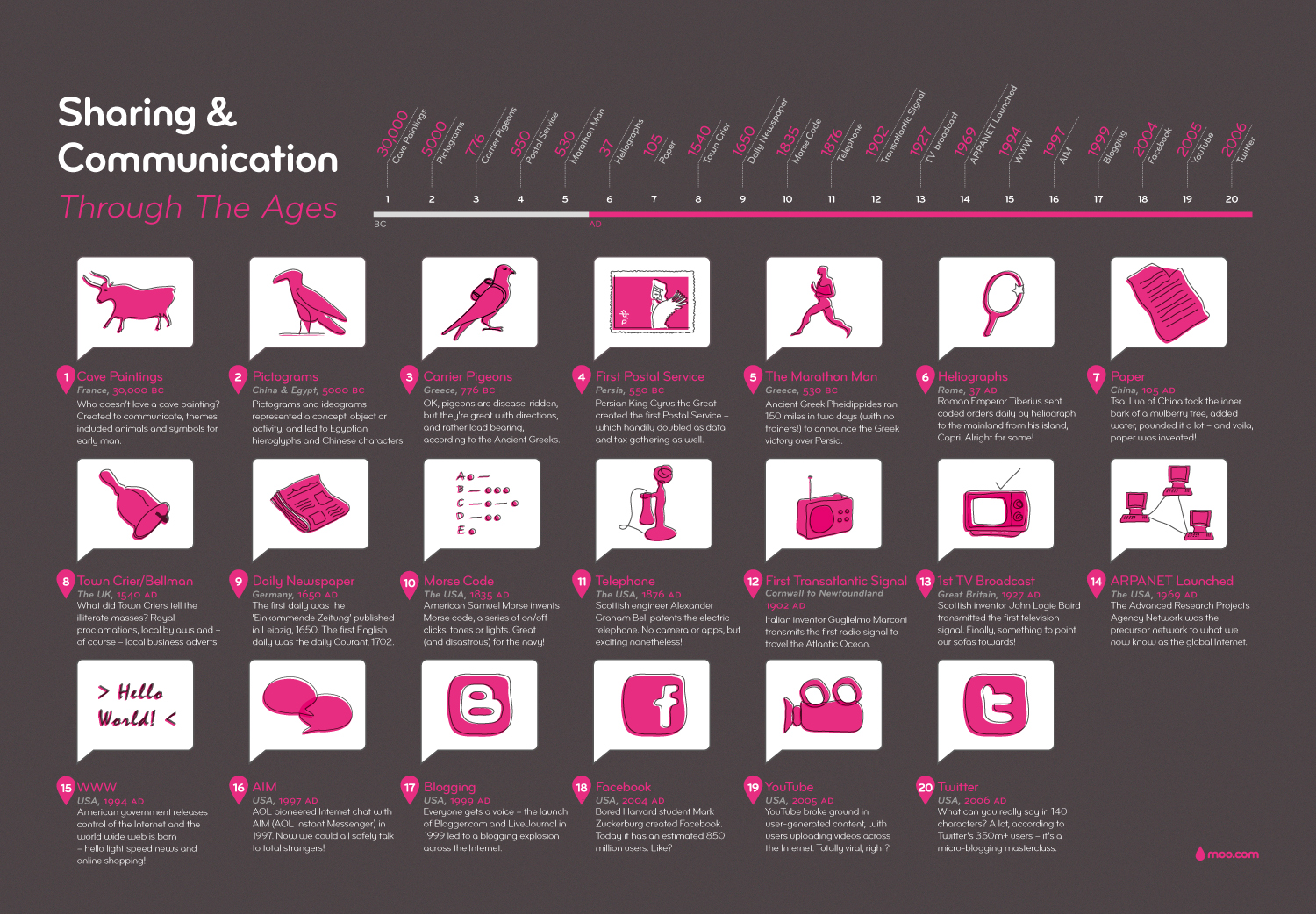
Communication transpired since the beginning of humanity. From an idea comprehended by the mind it was molded into signs, signals, and symbols (Cangelosi, 2001). Oral communication followed right after, then succeeded by writing (Lambert, 2019). The use of smoke signals at approximately 1800 BC evolved thousands of years later to telegrams, mechanical computer, telephone, radio, email, cellphone, World wide web, Google, and many other inventions (Doyle, 2016). The past simply illustrates the constant change in communication media.

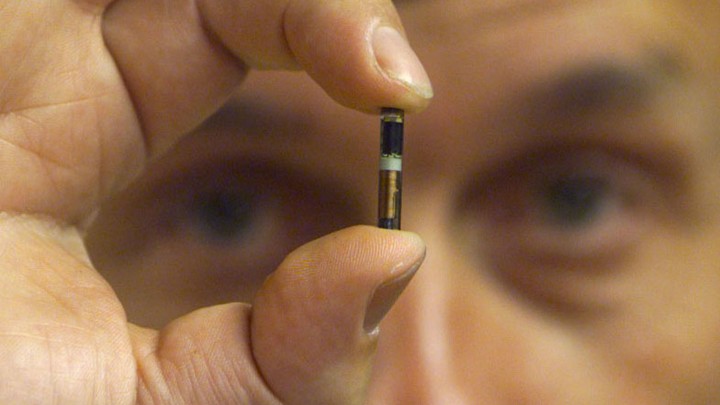
Moving further into the future, microchips or memory cards that are biologically implanted could be the main medium of communication in 50 years’ time. These will act as credit cards, keys and train tickets. Short-range radio frequency identification (RFID) implant could already hold personal information such as medical history and acts as identification card as well as passport (Hooijdonk, 2013). Modifications of these chips could possibly replace smart phones and computers in texting, calling, and internet surfing.

Photo: USA Today

These chips are already developed and being used in countries such as Sweden and in fifty or less years the whole world may have access to these devices (Agence France-Presse, 2018). Trends in communication show that communication media changes in more or less 20 years from its current form (Eastman, 2013). It also shows that even with change, it is inevitable that people revert to old ways and use the former medium of communication. Thus, 50 years is enough for microchips to improve and be used in a worldwide scale.

RFID microchip Photo: Russel Boyce

This medium of communication may vary according to today’s progress mainly in the field of science and technology. The probability of microchips as main medium of communication is minute compared to millions of possibilities that could arise between today and the future. With the human mind, nothing seems impossible.

References:

Agence France-Presse. (2018, May 13). Thousands of people in Sweden get microchip implants for a new way of life. Retrieved from South China Morning Post: https://www.scmp.com/news/world/europe/article/2145896/thousands-people-sweden-get-microchip-implants-new-way-life

Boyce, R. (Photographer). (2018, September 21). RFID microchip [photograph]. Retrieved from https://www.theatlantic.com/technology/archive/2018/09/how-i-learned-to-stop-worrying-and-love-the-microchip/570946/

Cangelosi, A. (2001). Evolution of communication and language using signals, symbols, and words. IEEE Transactions on Evolutionary Computation, 93 – 101. Retrieved from Journal and Magazines: https://ieeexplore.ieee.org/abstract/document/918429/

Doyle, J. P. (2016). The History Of Communication Technology. Retrieved from Conference Calls Unlimited: https://www.conferencecallsunlimited.com/history-Of-communication-technology/

Eastman, H. (2013, July 7). Communication changes with technology, social media. Retrieved from The Daily Universe: https://universe.byu.edu/2013/07/07/1communication-changes-with-technology-social-media/

Hooijdonk, R. v. (2013, April 23). Human Microchipping, The Benefits And Downsides. Retrieved from Richard van Hooijdonk: https://richardvanhooijdonk.com/blog/en/human-microchipping-the-benefits-and-downsides/

Lambert, T. (2019). A Brief History Of Communication . Retrieved from Local Histories: http://www.localhistories.org/communications.html

How the microchips work [Digital image]. (2017). Retrieved from https://www.usatoday.com/story/tech/talkingtech/2017/07/25/do-microchip-implants-pose-health-risks-ask-swedes-and-pets/507408001/

How Will We Communicate in the Next Five Decades?

by: Macy L. Tagaduar & Era Mae B. Suarez

Before taking a leap to the future, the long line of history on the advancement of communication and media paved the way to the existence of today’s system. Gone are the days of the clickety- clack of typewriters, snail mails, rotary-dial phones, and the beeping pagers. We bid goodbye to the first computers, black and white televisions, and antique radios that are now collected for vintage collections. People have been provided with a lot of options to make life convenient.

Human voice is the first means of communication (Tim Lambert, 2019). Yet turning the clock back to the earlier years of human life, cavemen inscribe accounts of their activities in cave walls. They adapted the use of signal systems such as smoke, instrument sounds, and flags to point out messages. Later, writing systems and the use of pigeons to transmit letters took place. All these emerged however the advancement continued.

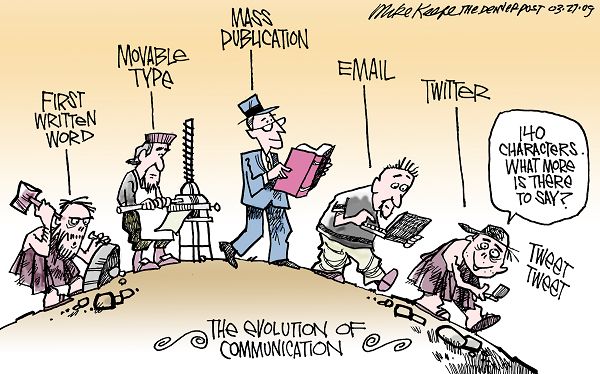
The constant progression brought bezel-less touch phones, instant messaging and electronic mail, and smart language translation. Communicating became easier as a child learning his first ABCs. For just hitting that send button, poof, the receiver gets the message in no time.

Evolution of Communication
Keefe, M. (2009). Evolution of Communication. (Cartoon). Retrieved from https://www.intoon.com/cartoons.cfm/id/68559

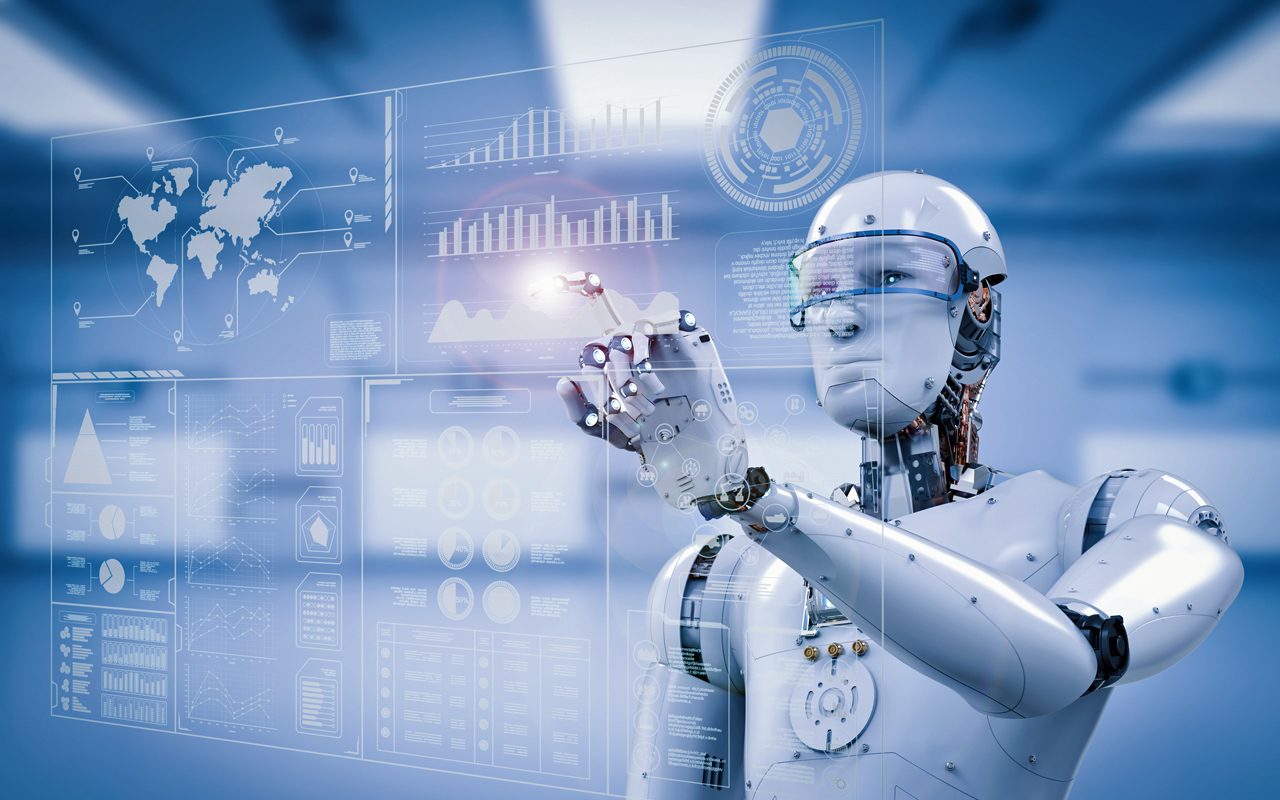
Setting those aside, we wonder how it would be like 50 years in the future. The possibility of having hologram- like screens that are allowed for daily human use which just pop-up anytime and anywhere is positively probable. Holograms already exist yet not introduced to the commercial market because of the danger it could bring to human skin contact (Gorey, 2015). In addition, gizmos equipped with advanced human intelligence that can converse with humans could be the next version of Google. Also, sending thoughts directly to someone’s brain by a series of neural alteration might be possible. Scientists have even already started developing the neural- control interface which allows a person’s brain to give inputs to a computer and create an artificial output through the use of the recorded brain activity (Abhang et al., 2016). It may seem too futuristic but still, nothing’s impossible.

Media Planning’s Next Big Change Agent: AI
Lafayette, J. (2018). Media Planning’s Next Big Change Agent: AI (Digital Art). Retrieved from https://www.broadcastingcable.com/news/media-plannings-next-big-change-agent-ai

Communication and media are always interrelated. One day, all these predictions will be part of the long archive of evolution’s history. This proves that humans’ desire in seeking improvement does not end in a blink. Communication will continue to prosper and help humans strive for life. With media and technology’s aid, human interaction will be more efficient than we ever thought.

References:

Abhang P.,Mehrotra S. et.al. (2016). Introduction to EEG- and Speech-Based Emotion Recognition. Retrieved from https://www.sciencedirect.com/topics/neuroscience/brain-computer-interface?fbclid= IwAR1qPzIgULYBcp8XciC d2a7lPVir903Zkgfvs D7Wz2Vp7pvnQJ_ VcchTPJk

Gorey C. (July 2, 2015). A touchable, morphing 3D hologram has been invented in Japan. Retrieved from https://www.siliconrepublic.com/innovation/a-touchable-morphing-3d-hologram-was-invented-in-japan?fbclid=IwAR3w0dcEW6NnqlNiF5UIEF1gzOISU1l11_mtth2z1-D0aaTXBIyEKjL1q6c

Kaul V. (April 22, 2012). The Changing World of Media and Communication. Retrieved from https://www.omicsonline.org/open-access/the-changing-world-of-media-and-communication-2165-7912.1000116.php?aid=6473&fbclid=IwAR0Y6LZyzydkF7avYrPPxF9YnUYkWGT17Y-likXVNiTfbyP9Z4FuJ9x6hvM

Keefe, M. (2009). Evolution of Communication. (Cartoon). Retrieved from https://www.intoon.com/cartoons.cfm/id/68559

Lafayette, J. (2018). Media Planning’s Next Big Change Agent: AI (Digital Art). Retrieved from https://www.broadcastingcable.com/news/media-plannings-next-big-change-agent-ai

Lambert, T. A Brief History of Communication. Retrieved from http://www.localhistories.org/communications.html

Montgomery, A. (2019). What visual communication might look like in 50 years. Retrieved from https://www.monotype.com/resources/articles/what-visual-communication-might-look-like-in-50-years/?fbclid=IwAR3w-D2ehTIuw0ny98nLJjo73AKK2ukZNBYt0_WsDrsKI4hflnzVOth-654

The Advancements of Communication and Media in 50 years

by: Hazel Joy Nono and Myla Mae Pahamutang

Communication is one of the primary necessities of humans. Through it, we can obtain knowledge, express thoughts, and build relationships with other people. We, the people of the 21st century are blessed enough to have easier access to communication, however, this kind of privilege can’t be said about our ancestors before.

To communicate in the past was to spend a great deal of effort and money on mediums used to do such activity. However, due to societal developments, people eventually evolved from using non-verbal communication and smoke signals in 1800 BC to a writing system and a basic telecommunication process from 150 BC and 1876 respectively (Doyle, 2017).

Nowadays, communication is faster and easier than before. With the invention of different technologies, people would not even need to leave the comforts of their beds just to send messages. Almost all of the things we need to do can be done through various applications. There are already developed applications for food delivery, banking transactions, dating, books, shows, movies, and even online schools and markets for shopping.

In this kind of phasing and feedback from people, possibly more advanced apps and devices will be invented to provide more convenience.

With these, it is also not far from reality that people wouldn’t even give the effort to go outside to get things done. Print companies will slowly go bankrupt, restaurants, malls, banks, and other institutions will lessen as well because several researches state that people would rather choose the easiest and effortless way to do their day to day activities (Oaklander, 2015).

Indeed, communication is advanced compared to before but we should never let it take the essence of our humanity: to work hard for our goals and experience the different moments of our lives to the fullest with the people we cherish.

Bonding

(Disclaimer: We do not own any of the photos shown. All credit for these photographs belong to their respective owners.)

References:

Doyle, J.P. (2017). History of Communication Technology. Retrieved from: conferencecallsunlimited.com/history-of-communication-technology/

Oaklander, M. (2015). Here’s Proof that People Are Wired to be Lazy. Retrieved from: https://time.com/4027942/lazy-walking-exercise/

What will communication and media be like 50 years from now?

By Mara Cheriz Arcenal &  Keziah T. Gallo

The future of communication and media has a myriad of opportunities and innovations to offer. Thanks to technology, communication is now just a click away. However, this was not the case back then. Many years ago, communication and media were quite different in comparison to what they are today. From writing a letter stroke by stroke in 500 B.C. to delivering a telegraph by horse in the 1970’s, message transmission has been progressing evidently, even before (Szabo L.V., 2014). Communication has developed despite distances when telephone lines and radio signals were introduced in 1890 and 1891. Media history was shaped when the television was created in the 1920’s and computer networks rapidly modified technology and thus, emerged the Internet in the 20th century.

Social Media Network. Photo by Gerd Altmann from Pixabay. Retrieved August 30, 2019, from https://pixabay.com/illustrations/social-media-social-network-3758364/

In the coming years, the possibility of inventions that were once considered far-fetched ideas could bring forth a digital culture with ease and convenience. Such predictions include the fast-charge battery, the language-translator, and robots or androids (Sterkenburg T., 2012). The Age of Graphene industrializes a fast-charging battery in replacement of the lithium ion battery for all types of gadgets. Moreover, a language-translating device would be made available to bridge the language barrier between locals and foreigners while travelling. Likewise, Artificial Intelligence robots or androids may take over by answering company phone calls for queries, providing data and displaying presentations in schools, giving directions to tourists, scanning for medical diagnoses and more.

Artificial Intelligence. Photo by Gerd Altmann from Pixabay. Retrieved September 2, 2019, from https://pixabay.com/illustrations/artificial-intelligence-brain-think-4389372/

From this, we can infer that there is a vast difference in our daily life in the past, today in the present, and 50 years from now in the future. By now, we should expect and be open to changes in the trends of communication. Lastly, we should observe proper usage of these things once it is made available to us.

Altmann G. (2019) Artificial Intelligence. Retrieved September 1, 2019, from https://pixabay.com/illustrations/artificial-intelligence-brain-think-4389372/

Altmann G. (2018) Social Media Network. Retrieved August 30, 2019, from https://pixabay.com/illustrations/social-media-social-network-3758364/

Sterkenburg T. (2012) What’s the future of communication? Let’s ask the experts. Retrieved August 24, 2019, from https://thenextweb.com/media/2012/07/15/whats-the-future-of-communication-lets-ask-the-experts/

Szabo L.V. (2014) The Future of Communication: from New Media to Postmedia. Retrieved August 24, 2019, from https://www.sciencedirect.com/science/article/pii/S1877042814063848